
Case study / Supplement E-Commerce · Next.js + Shopify Checkout
IMPOWERLIFE™.
Rebuilt a Kelowna amino-acid brand's storefront as a fast Next.js site on Shopify checkout, with a cited evidence chart and every label amount on the page.
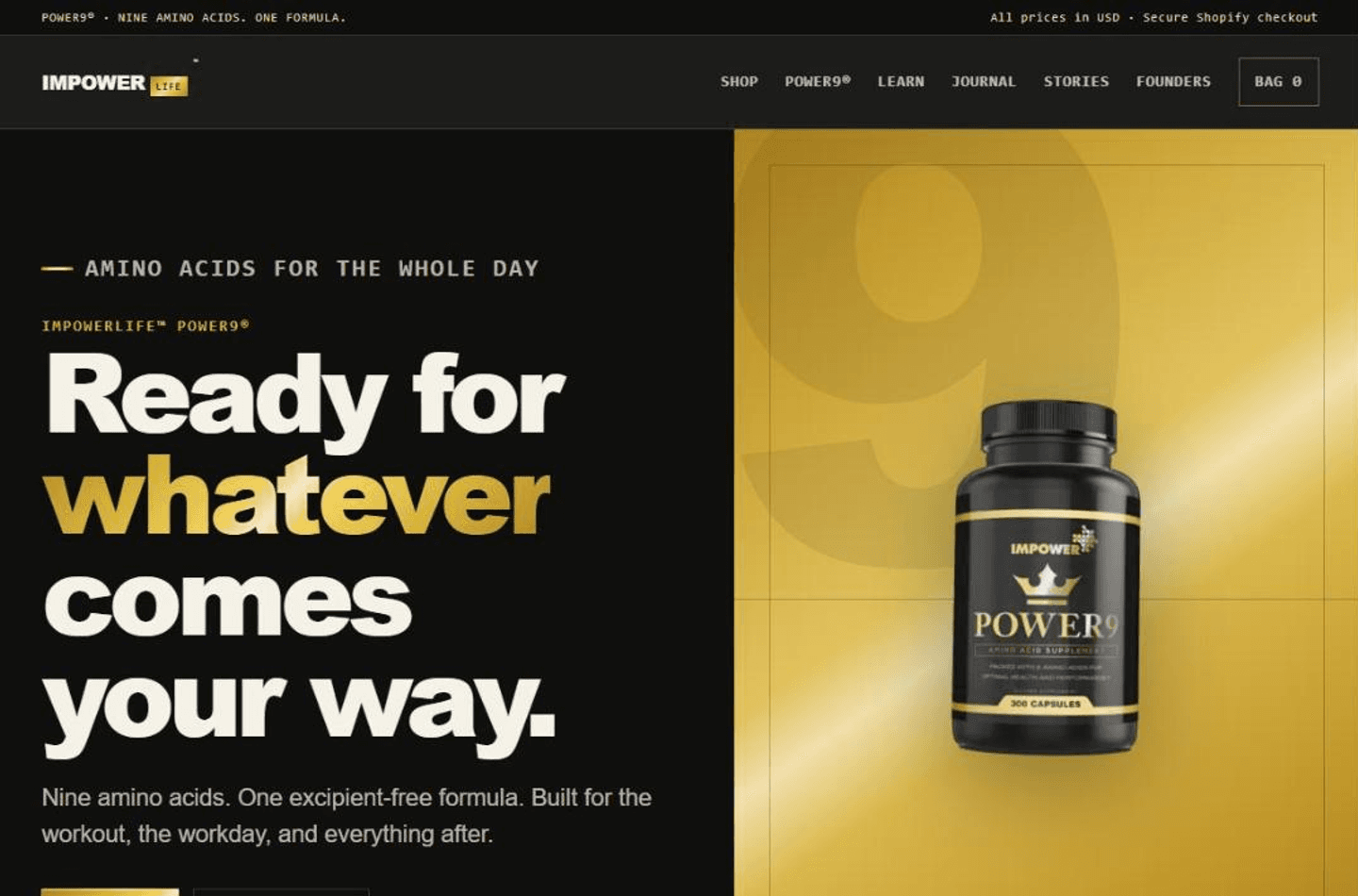
fig. 01 — Homepage — Ready for whatever comes your way
What the build
actually covers.
Measurement window pending — see §08 for the 30/60/90 reporting plan.
What the project
needed to do.
IMPOWERLIFE™ (IMPOWER Life Inc., Kelowna, British Columbia) makes POWER9®, a nine-amino-acid dietary supplement in capsules, founded by supplement formulator Kevin Ramirez and chemical engineer Marianne Boctor. In 2026 the studio replaced the brand's Shopify theme with a custom Next.js site on Vercel while keeping Shopify as the checkout, cart and subscription engine. The new site carries 52 indexable pages (checked November 23, 2026): the POWER9® product page with full supplement-facts amounts, five benefit pages, audience pages, nineteen Learn guides, ingredient pages, the founders' migrated journal, and an amino-acid evidence chart grading 68 outcomes across 25 compounds against their PubMed citations. Legacy Shopify and blog URLs redirect to their new homes, including a 2017 article cited by a University of Minnesota open textbook.
IMPOWERLIFE™ had a decade-old product, two founders with a real story, and a template storefront that hid both. Ingredient amounts lived in label photos, the blog's strongest claims had no disclaimers or citations, the brand name appeared three different ways, and the one university citation the site had earned pointed at a URL the platform no longer served. The job was to rebuild the site around what a careful buyer actually checks, without touching the checkout that was already taking orders.
Every supplement-facts amount is readable on the page, not locked in a label imageWhat moved the needle
What it looks like,
on screen.
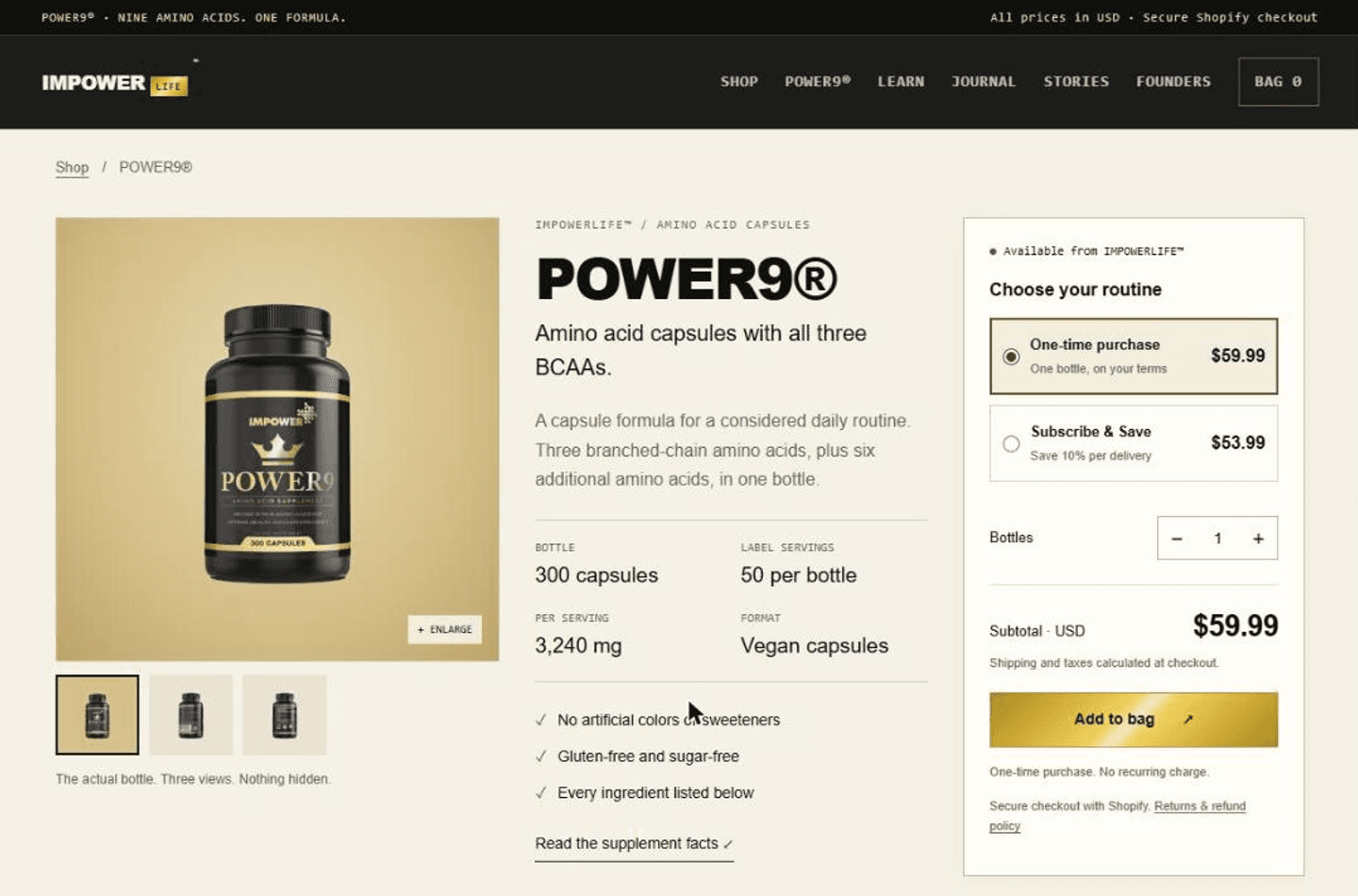
The deliverables,
line by line.
A custom Next.js site on Vercel with Shopify kept underneath for cart, checkout and subscriptions. The product page reads straight from the label. Benefit, audience and Learn pages were written to a keyword map with one owner per keyword. The founders' journal was migrated with its bylines, and articles making disease-adjacent claims were held from search pending review. The evidence chart grades 68 outcomes across 25 amino acids against their PubMed sources and publishes the null and harmful findings alongside the positive ones. Old Shopify and blog URLs redirect to their new pages, and a single entity graph ties the brand, its founders, its product and its articles together.
- Storefront rebuild — Shopify theme replaced with a custom Next.js site on Vercel; Shopify kept for cart, checkout and Subscribe & Save
- Product page built from the label — 300 capsules, 50 labeled servings, 3,240 mg per serving, and every one of the nine amino acids listed with its amount
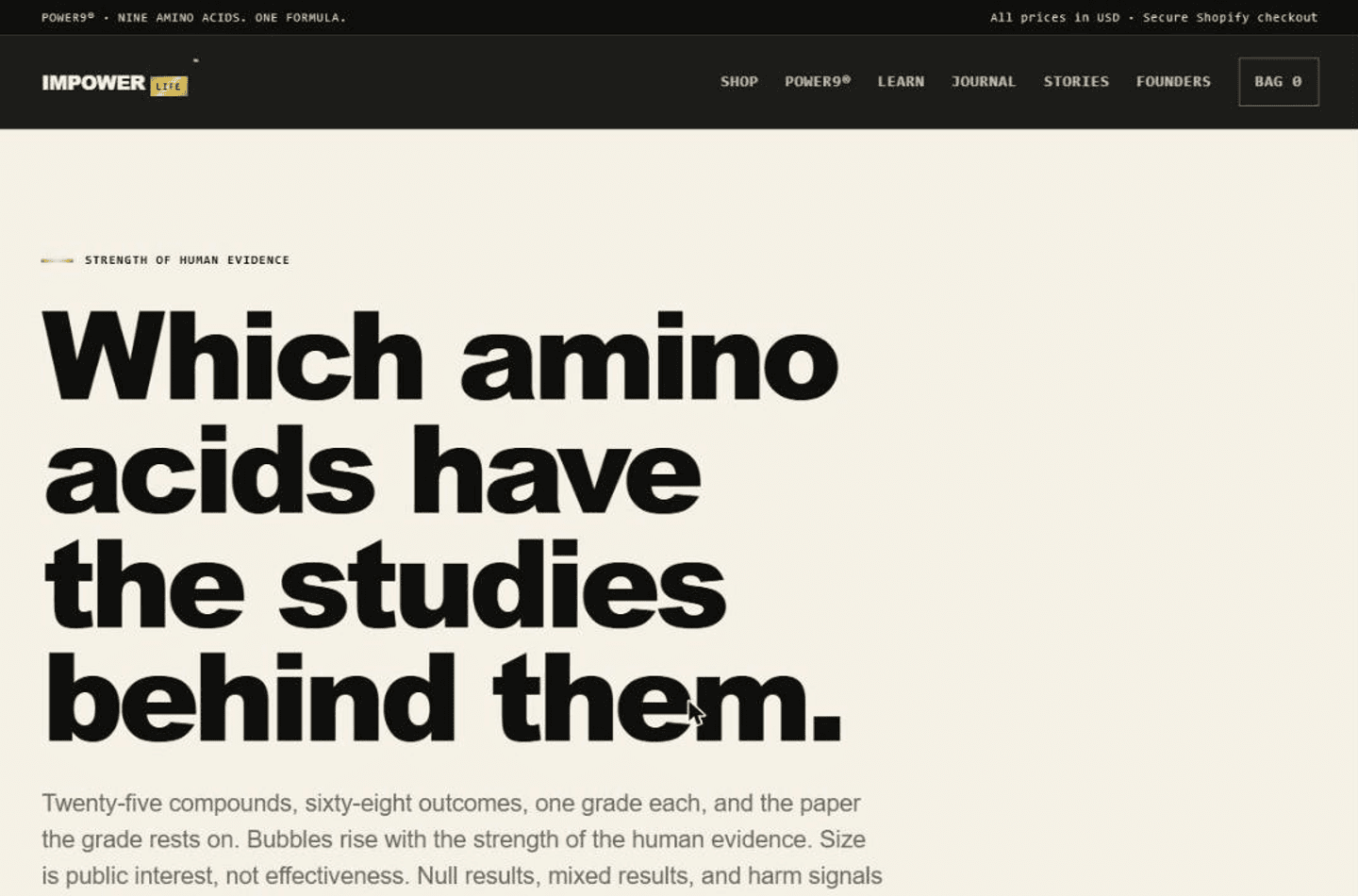
- Amino acid evidence chart — 25 compounds and 68 outcomes, each graded on the strength of human evidence and linked to its PubMed source; null results and harm signals are shown, and independent review is disclosed as pending
- Claims gate — structure/function language only, with the FDA disclaimer beside every benefit claim; disease-adjacent journal articles held from search until reviewed
- Nineteen Learn guides and five benefit pages written to a keyword map of 55 keywords across 32 pages, one owner per keyword
- Founders' journal migrated from the Shopify blog with original bylines; articles carry Person schema for Kevin Ramirez and Marianne Boctor
- Legacy URL recovery — old Shopify product, page and blog URLs permanently redirected, including the 2017 ammonia article cited by a University of Minnesota open textbook
- Entity schema — one Organization node with verified social profiles, founder Person nodes, Product schema referencing the brand, and Article authorship
- Measurement — Google Tag Manager, GA4 with Consent Mode v2, and Search Console, with lead, call, add-to-cart and begin-checkout events verified end to end on October 22, 2026
- Wholesale path for clinics, gyms and retailers in Canada and the United States, with a documented inquiry route
How the build
earns the call.
Search structure comes from a keyword map of 55 keywords across 32 pages, with titles, descriptions and H1s matched to each page's job. The Organization schema lists the brand's verified social profiles and founders, the Product schema names the brand as maker, and every journal article names its author. Conversion is measured, not assumed: lead forms, phone taps, add-to-cart and checkout starts are GA4 key events, verified firing before any reporting began.
The site now gives buyers, practitioners and wholesale accounts the same thing: the label, the research and the people behind the formula, on pages fast enough to load before attention runs out. Shopify still runs every order. Search and revenue results are not claimed here; the first measured read is scheduled after the keyword-map pages complete their first full month in search.
A supplement brand lives or dies on trust, and trust is a sourcing problem before it is a design problem. The rebuild moved IMPOWERLIFE™ off a template storefront onto a fast custom site where every ingredient amount is on the page, every health statement sits next to its disclaimer, and the research behind nine amino acids is shown with its citations, its null results and its harm signals. Checkout stays on Shopify, so the store kept its orders, payments and subscriptions while the website became something worth linking to.Studio rationale
Metrics, captured
at 30 / 60 / 90 days.
Tracking dashboard captures GSC + GA4 at 30 / 60 / 90 days. Report publishes here on day 90 — view tracking spec